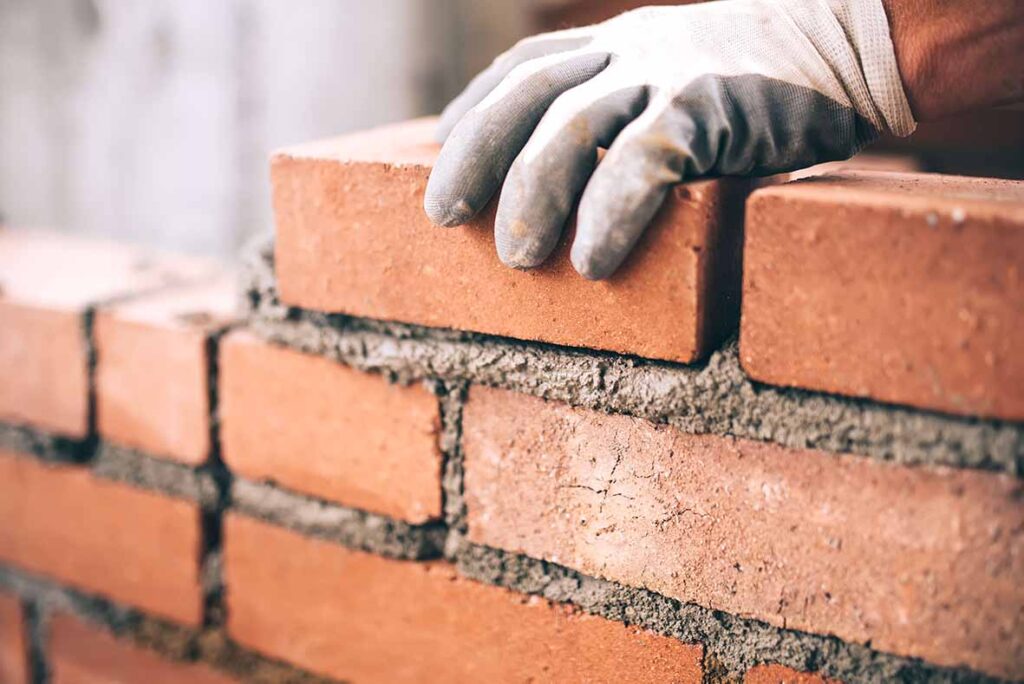
Get practical construction skills in Brick Layer Mason Training in Nepal at Apex Skills Academy & Research Center. The course is intended to train the learners to acquire the professional skills of masonry by doing hands-on practice based on the CTEVT curriculum, which covers the subject of brick laying, preparation of mortar, wall alignment, bonding, construction safety, and other important aspects of masonry.
This training, which covers 390 hours of development, practical training, and skills for the construction industry, can help individuals jump-start their careers in the construction sector, whether as a beginner, construction helper, or a person looking to change careers.
Apex Skills Academy provides training at its Chabahil and New Baneshwor branches in Kathmandu.
Brick Layer Mason Training Course
|
Course Information
|
Details
|
|
Course Name
|
Brick Layer Mason Training
|
|
Training Area
|
Masonry / Construction
|
|
Curriculum
|
CTEVT curriculum
|
|
Training Hours
|
390 hours
|
|
Approximate Duration
|
2–3 months, depending on the training schedule
|
|
Training Method
|
Practical and technical training
|
|
Typical Course Fee
|
NPR 15,000–30,000
|
|
Training Locations
|
Chabahil & New Baneshwor, Kathmandu
|
|
Suitable For
|
Beginners, SEE/SLC graduates, mason helpers, and career changers
|
|
Certification
|
According to the applicable training and assessment arrangement
|
|
Career Path
|
Mason, Mistry, Site Mason, Specialist, Subcontractor, or Contractor
|
What Is Brick Layer Mason Training?
Brick layer mason training is a vocational training course designed to instruct a student on correct, safe, and efficient use of masonry and construction skills.
The training is aimed not only at imparting theoretical knowledge but also the skills that are expected to be applied on the construction sites. The learner can learn to prepare mortars, handle bricks, bond brick patterns, construct walls, measure, align, open work, install an RCC lintel, install openings, understand basic RCC, and understand workplace safety.
If you are looking for a mason course in Kathmandu, you can start by practicing and learning the skills of the craft in a structured way and build your way from a helper to a skilled mason.
Why is skilled trade masonry such an important trade to learn?
The construction industry demands masons who can work accurately and consistently in masonry tasks. They can be involved in a variety of tasks, such as making sure the walls are aligned, mixing and applying mortar, making openings, and working with other construction trades.
Structured training and learning in masonry can benefit you by:
- Cultivate practical construction skills and techniques
- Know the correct method of laying a brick
- Enhance accuracy of measurements and alignment
- Understand the use of basic masonry tools
- Be able to prepare and use mortars
- Follow construction-site safety procedures
- Strengthen the starting point in the field of skilled masonry; prepare a steppingstone to skilled masonry employment.
- Move from helper to mason to mistry positions
- Discuss potential specialization in tile, marble, or other building trade-related fields in the future.
- Develop skills that may be useful for future subcontracting/contracting opportunities.
- The aim is not just to impart bricklaying skills to learners but to build the basic technical and practical skills needed for masonry work.
Can anyone attend Brick Layer Mason Training in Nepal?
The course is recommended for individuals wishing to join or develop their careers in construction.
SEE or SLC Graduates
If a student has finished SEE or SLC and wants to opt for a career in practical vocational training, then he/she can opt for masonry as a construction-related career.
The course offers the chance to learn about skills beyond academics.
Mason Helpers
Formal training can complement and reinforce the knowledge and skills acquired through on-the-job experience for individuals already employed as construction or mason helpers.
They can be educated through training to learn the proper techniques, measurements, tools, safety practices, and masonry methods systematically.
Beginners
It is not necessary to have a lot of experience in any field of masonry to get started in the basics in a systematic way using apprenticeship training. Please check the admission criteria with Apex admissions.
Career Changers
Masonry training may be a good choice if you're thinking about a different career path, as it will give you building skills as a starting point for the construction industry.
Future Masons and Contractors
Masonry training can be a steppingstone towards the acquisition of real site knowledge by people who want to become skilled masons, mistsries, subcontractors, or construction contractors.
Why do you learn in Mason training?
The basic activities that brick masons do when working on a building site should be included in a quality brick mason training program.
The training mapped for Apex is based on practical skills of masonry, like mixing mortar, bonding bricks, alignment of walls, openings, lintels, and basic RCC knowledge.
Masonry Tools & Equipment
Students are introduced to a variety of masonry tools and purposes.
These can include:
- Mason's trowel
- Measuring tape
- Spirit level
- Mason's line
- Pins
- Hand tools
- Basic construction equipment
- Personal protective equipment
Accurate and efficient masonry with the proper tools and proper tool handling.
Mortar Mixing and Application
Mortar is one of the vital materials used in brick masonry.
Learners develop an understanding of:
- Material measurement
- Mortar preparation
- Proper mixing
- Consistency
- Mortar application
- Material handling
- Avoiding unnecessary wastage
Good mortar work is a factor in the quality and standard of masonry construction.
Brick Selection and Handling
The basic principles of brick selection, handling, positioning, and laying are taught. Minimizing breakage and ensuring consistent quality in construction work helps workers.
Brick Bonding
Brick bonding refers to the way that bricks are arranged in a wall.
The training covers some of the typical bonding patterns that include:
- Stretcher bond
- English bond
- Other basic brick configurations bonding
Brick bonds provide an understanding of how brick is constructed and put into place on the wall for a project.
Wall alignment and leveling
Wall accuracy is one of the most important aspects of masonry.
Learner’s practice of maintaining:
- Straight wall lines
- Horizontal levels
- Vertical plumb
- Correct measurements
- Uniform brick courses
- Correct corners and junctions
Masons use tools like spirit levels, measuring tapes, lines and pins for accuracy.
Wall Openings
There are many construction projects where openings are needed for doors, windows, ventilation and more.
Students are taught the fundamental principles of making masonry around openings and how to ensure the correct measurements and alignment.
Lintel Work
Certain wall openings are topped with lintels.
The training is an introduction to basic lintel related masonry practice, and coordination of masonry work around openings with the building structure.
Basic RCC Understanding
Carpenters, bar-benders, engineers, supervisors and other construction workers frequently work with brick masons.
Basic knowledge of reinforced cement concrete (RCC) is useful to help the learners to understand the relation of masonry activities with other construction activities.
Basic drawing and site understanding
Workers in construction must work based on measurements, instructions and simple drawings.
The training can enable learners to build awareness of:
- Basic construction drawings
- Measurements
- Site instructions
- Construction terminology
- Working under supervision
- Coordinating with engineers and mistries
- Construction-site etiquette
Brick Layer Mason Training Curriculum
The course curriculum is designed around the practical competencies required for masonry work.
|
Training Area
|
Key Skills
|
|
Tools & Safety
|
Tool identification, correct use, PPE and workplace safety
|
|
Materials
|
Brick identification, handling and material preparation
|
|
Mortar
|
Measuring, mixing, consistency and application
|
|
Brick Laying
|
Correct positioning and laying techniques
|
|
Bonding
|
Stretcher, English and other basic bonds
|
|
Wall Construction
|
Alignment, level, plumb and measurement
|
|
Openings
|
Door and window opening practices
|
|
Lintels
|
Basic masonry practices around openings
|
|
RCC Basics
|
Fundamental understanding of RCC and construction coordination
|
|
Drawings
|
Basic interpretation of construction information
|
|
Site Practice
|
Team coordination, communication and workplace discipline
|
Practical Training in Masonry Skills
Masonry is a hands-on occupation. Learners must build up their coordination, accuracy and confidence in construction through experience.
While engaging in practical training, students may be given practical tasks, including:
A mension, Prep, Lay, Align, Level, Check, Correct
By practicing repeatedly, learners can gain a grasp on how measurements and mortar consistency, brick positioning, bonding and alignment contribute to the final product.
Students also can recognize and make corrections to typical masonry errors while being guided by the practical learning.
Brick Layer Mason Training Duration
The mapped program outlines a 390-hour CTEVT curriculum and suggests that this training can be offered as a concentrated 2–3-month program depending on the specific training schedule.
Apex may run batches as per the training schedule, they could be morning or evening batches if available.
Students are advised to check the following prior to enrollment:
- Starting date
- Daily class hours
- Total training hours
- Batch timing
- Practical training schedule
- Assessment dates
- Course completion requirements
Brick Layer Mason Training fee
Course fees for mason in Nepal may differ based on the training program, course duration, practical aspects, assessment and certification process.
The usual course fee for the Apex course is about:
NPR 15,000–30,000
The exact amount should be confirmed with Apex Skills Academy for the current batch.
|
Fee Information
|
Details
|
|
Typical Fee Range
|
NPR 15,000–30,000
|
|
Fee Variation
|
Depends on the selected training program and current batch
|
|
Practical Training
|
Included according to the selected program
|
|
Assessment
|
Confirm with admissions
|
|
Certification
|
According to the applicable arrangement
|
|
Installments
|
Confirm current availability
|
|
Discounts/Concessions
|
Confirm with Apex
|
What can be included in the Course fee?
Depending on training arrangement, the course fee will include:
- Technical instruction
- Practical training
- Training-related exercises
- Use of appropriate training facilities and equipment.
- Assessment
- Learning support
- Certification, where applicable
Pupils are advised to check the full fee structure before they are admitted.
What are the options for installments?
When installment payments are offered for the selected batch, students may inquire with Apex Skills Academy regarding the installment plan they are currently using.
The actual amount and payment terms may vary from batch to batch, so please check directly with admissions.
Certification After Mason Training
When selecting a vocational training program, certification can be an important factor to consider.
The mason training page should be clearly written in Apex about what the current certificate, issuing authority, assessment process, applicable CTEVT/NSTB arrangement, etc. are for the selected program.
The concept of being affiliated or accredited to an institution and the certificate received by a student must be separated.
It is therefore important for students to verify:
- Certificate title
- Issuing authority
- Assessment requirements
- Course completion requirements
- Determining if an external skill test is applicable.
Upon successful completion, the student will receive a certificate. This helps to avoid a blanket certification claim.
Job Opportunities After Mason Training
Learners who have developed their masonry skills and gained practical experience will be given the opportunity to look at different work paths.
Mason Helper
New entrants can start out as helpers, gaining hands-on experience and knowledge of construction-site practices.
Brick Mason
A worker can assume responsibility for brick laying and associated masonry work with appropriate skills and experience.
Mistry / Site Mason
More advanced jobs will provide opportunities for experienced workers to advance to higher-level responsibilities for masonry work and working with other workers.
Tile and Marble Specialist
Masons can build on their abilities in finishing work, like tile and marble work.
Construction Subcontractor
For experienced workers, they will be able to eventually assume responsibility for certain construction tasks as subcontractors.
Mason Contractor
An experienced mason can build up their skill set in technical expertise, estimating, material calculation, client management, supplier coordination, and business knowledge to enable them to become independent contractors.
Mason Career Path in Nepal
The most common sequence is
Mason Helper → Skilled Mason → Mistry/Site Mason → Specialist → Subcontractor → Contractor
It is not a given that you will advance in your career. It relies on experience, craftsmanship, reliability, project exposure, specialization, communication skills, and business acumen.
Training gives workers a technical basis, and on-site experience enables them to gain speed and accuracy and problem-solving skills.
How to Become a Mason in Nepal
If you are a new entry to the job, the following path will give you an idea of the procedure.
Step 1: Basic Construction Skills
Firstly, learn about the materials, tools, measurements, mortar, brick laying, and safety in masonry work.
Step 2: Take part in a structured Mason training program.
Find a relevant and hands-on mason training course in Nepal.
Step 3: Technique Practice
Develop practical skills in:
- Mortar preparation
- Brick laying
- Bonding
- Wall alignment
- Leveling
- Measurement
- Openings
- Basic construction practices
Step 4: Do the Required Assessment
Complete assessment and certification requirements, if any, for the training program (where applicable).
Step 5: Get Construction-Site Experience
Under the supervision of the master masons, learners get opportunities to develop practical speed, accuracy, and understanding of actual construction conditions.
Step 6: Learning towards Skilled Mason Work
With the skills and experience gained, workers can be able to engage in more complex masonry tasks.
Step 7: Become specialized or enter contracting.
For seasoned masons, advanced specialization or a transition to subcontracting and construction contracting are viable career paths.
Mason vs. Mason Helper
Understanding the difference between a mason helper and a skilled mason is important for people starting a construction career.
|
Mason Helper
|
Skilled Mason
|
|
Supports the construction team
|
Performs technical masonry work
|
|
Handles and prepares materials
|
Lays bricks and constructs masonry
|
|
Assists with tools
|
Using masonry tools independently
|
|
Works under direction
|
Handles assigned masonry tasks
|
|
Developing technical skills
|
Has stronger practical competence
|
|
Entry-level construction role
|
Skilled construction role
|
A helper can develop into a skilled mason by gaining practical experience and learning correct masonry techniques.
Skills of a Professional Brick Mason
A professional mason requires a mix of technical skill, accuracy in practice, and an attitude to work.
Important skills include:
- Brick laying
- Mortar preparation
- Brick bonding
- Measurement
- Leveling
- Plumb checking
- Wall alignment
- Tool handling
- Material management
- Basic drawing interpretation
- Safety awareness
- Quality control
- Team communication
- Problem-solving
- Time management
These skills become increasingly vital as a helper and move into more independent masonry responsibilities.
Why Choose Apex Skills Academy (ASA) for Mason Training?
Apex Skills Academy & Research Center offers vocational training based on skills.
The course mapping for bricklayer training in Nepal focuses on:
- CTEVT curriculum
- Hands-on training
- Practical masonry skills
- Job-oriented learning
- Career support
- Kathmandu-based training locations
- Chabahil and New Baneshwor branches
The course should focus on actual training attributes and current information on programs and not on unsubstantiated employment or income assurances.
Why Practical Mason Training Matters
Workmanship is crucial in construction quality. While a wall may seem quite straightforward, the following tips are important to consider when building masonry walls:
- Measurement
- Alignment
- Level
- Plumb
- Mortar
- Bonding
- Brick placement
- Openings
- Finishing
- Safety
Structured training enables trainees to learn and practice these skills under a helping hand, rather than relying solely on trial and error on the construction site.
What is the future of brickmason training in Nepal?
For hands-on construction workers, masonry may be a career choice to consider. Skilled construction workers are in demand and can find opportunities in a variety of construction-related areas, such as residential construction, commercial building, renovation, and infrastructure-related construction.
However, there are some differences in income and advancement based on:
- Skill level
- Experience
- Location
- Type of construction project
- Specialization
- Employment arrangement
- Work quality
- Productivity
Learners should not only consider the income potential of masonry but also their interest in the hands-on side of construction and their desire to build skills through experience.
Start Your Career in Masonic Training
Whether you're interested in a career in construction or looking to enhance your masonry abilities, Brick Layer Mason Training in Nepal can offer a foundation of structured knowledge in essential masonry techniques.
As part of the training in Apex Skills Academy, students will gain hands-on experience working with masonry materials and tools and put in the effort to secure a future career path in the industry, such as becoming a mason helper, skilled mason, mistry specialist, subcontractor, or contractor.
Please contact Apex Skills Academy for the current fee for the courses (around NPR 15,000-30,000), the next batch, training dates, admission criteria, the certification plan, and the seats available.
Enroll or Enquire Today
Apex Skills Academy & Research Center
Training Locations: Chabahil & New Baneshwor, Kathmandu
Phone: Chabahil: 9801910595, 9841794952 | New Baneshwor: 9801359697, 9801359698
Email: info@apexskillsacademy.com
Website: www.apexskillsacademy.com
Build practical skills. Gain construction experience. Start your journey toward becoming a skilled mason.