Unfortunately, no one is born a barber, and you will need much more than a pair of clippers to build a stable future: proper technique, hygiene protocol, supervision while practicing for hours on end, and appropriate client-contact techniques such as answering questions like how long it takes their hair to dry after leaving your chair, as well as an eye-catching blog page that promotes personal brands (self-promotion), customer service skills, and knowledge about portfolios/building clientele’s attention span are just some things that may help get started. If you are looking for a barber academy in Kathmandu, never go with one because the advertisement presents itself as cheap or guarantees immediate jobs.
When you choose your career goals, they must match with your professional development path, time, and skill level. See this guide for comparing barbering institutes in Kathmandu, what a powerful curriculum should incorporate, and the best way to judge practical training, as well as the questions you must ask before paying your fees.
Start With Your Barbering Goals
Prior to visiting any training centers, make sure that you have decided on what to do after finishing your course. The learning journey of a novice looking for a job would be different from an experienced barber who wants to run the shop.
Choose the right course level.
When starting from zero, search for a foundation path with the following concepts:
- Tool handling and maintenance.
- Basic scissors and clipper cuts.
- Sectioning, blending, tapering, and fading.
- Beard grooming and shaving.
- Hygiene, sanitation, and client safety.
- Consultation and customer service and support.
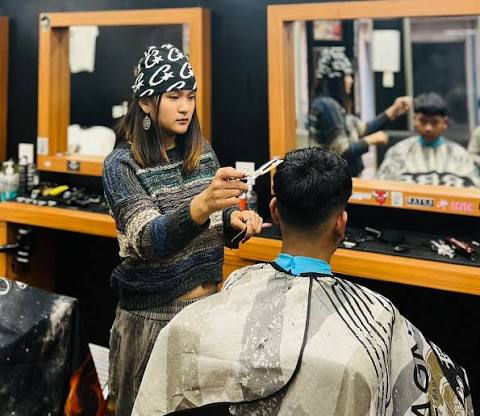
A brief workshop class can help the students to develop their professional skills. For a well-structured barber class and curriculum with mannequin practice, live models, ongoing evaluations and assessments under the supervised instructors, and their feedback can really change your career pathway.
High-level barber training for experienced or self-taught barbers might be in the technicalities of skin fades, razor work, beard design & sowing, texturizing, and/or color techniques, as well as quicker working times.
Decide where you want to go with your career.
The institute you select must depend on what career path you want to pursue.
Job at a barbershop: Concentrate on speed of cutting, service consistency, consultation, and care for the customer.
Freelance barbering: Select a course with versatility that teaches you how to work with different clients and environments.
Barbershop ownership: Discover lessons addressing pricing, appointment scheduling, shop setup, marketing and advertising, bookkeeping, and management of repeat clients.
Overseas employment: Inquire into assessment criteria, certificate particulars, hands-on experience, and documentation that may be requested by employers.
A certificate can help you to boost your application, but practical skills and a portfolio, work ethics, and work experience can create a huge impact on your success.
Calculate your real budget.
The sticker price is just part of the total cost. Before enrolling, ask about:
- Registration and examination fees.
- Tools or personal equipment.
- Uniforms and protective supplies.
- Transportation across Kathmandu Valley.
- Replacement blades, products, or consumables.
- Reassessment charges.
- Income lost while attending classes.
A course that is a bit more expensive may be better value for money if it includes equipment, practice with a live model, assessment, and career support.
Compare Barber Training Institutes in Kathmandu.
Let go of the single social media post or glossy advertisement. Prepare a shortlist and use the same criteria to compare every institute.
Research the institute’s public information.
Read through the website, social media pages, or local listings, as well as student work and recent comments posted by alumni. Search for signs of actual training instead of stock photographs and weasel words.
Pay attention to:
- Current course details.
- Instructor profiles.
- Classroom with practical-training photographs.
- Student’s haircuts and grooming work.
- Course duration and schedule.
- Fee and payment information.
- Certificate and affiliation details.
- Graduate or employer references.
Online reviews are valuable, but honest feedback is way more helpful than a five-star rating. No one knows if the practical classes were handled professionally or not, if there would be clarity on whether there was any assistance from the instructor, how many students were there in the class, and where they were able to get the job after the training or not.
Request for written course details
Before visiting the training center, ask for a syllabus/readings list. It should explain:
- Total course duration.
- Total no. of classes or hours of training.
- Theory and practical components.
- Mannequin and live-model practice.
- Assessment method.
- Tools and materials provided.
- Certificate provider.
- Payment schedule.
- Refund, transfer, and missed-class policies.
If the institute cannot provide you with what you are going to learn, it would be a great warning sign.
Visit before paying
A personal visit can reveal whether the advertisement said it was true or not. Observe whether:
- Classes are clean and adroitly functional.
- Students are actively practicing.
- Instructors actively supervise practical work.
- Availability of clippers, scissors, razors, and other tools.
- Lighting and ventilation are adequate.
- Chairs, mirrors, washing stations, and access to water are acceptable.
- Students receive individual corrections.
- The classroom is overcrowded or not.
This is not just a purchase of lessons. You are selecting the environment, which will determine your upcoming work habit that may last a lifetime.
Check the Barber Course Curriculum.
An authentic barber training course will teach you from start to finish, covering not only popular hairstyles but also every step in the process of helping a client.
Haircutting and styling techniques
Look for lessons in:
- Scissor cutting.
- Clipper cutting.
- Scissor-over-comb.
- Clipper-over-comb.
- Low, mid, high, and skin fades.
- Blending and transition control.
- Line-ups and detailing.
- Textured crops.
- Classic and modern short hairstyles.
- Styling for different hair types.
A good curriculum should explain why the techniques would work and not just show students where to move a clipper. Students must learn angles, weight lines, and where hair grows from its natural state, for density alone will not dress in a style suited to the individual.
Shaving and beard grooming
When beard services are performed safely and consistently, they can grow to be an important income stream for a barber. The course should include:
- Beard trimming and shaping.
- Cheek-line and neckline detailing.
- Moustache styling.
- Straight-razor handling.
- Hot-towel preparation.
- Skin preparation.
- Post-shave care.
- Managing sensitive skin.
Ask how much time is dedicated to the razor work. A simple demonstration is not the same as comprehensive practice under guidance.
Client consultation
For example, a client might come in with a picture of a hairdo that would not work for their natural hair texture, face shape, or lifestyle. Someone with trained hands and good feel must express the options in a way that does not denounce the choice of the customer.
The training should cover:
- Practicing effective consultation questions.
- Evaluating hair type and condition.
- Considering face shape.
- Recommending realistic styles.
- Explaining maintenance requirements.
- Measuring one last time before culling to the desired length.
- Handling complaints professionally.
These communication skills are often the difference between whether a newcomer becomes a repeat customer.
Hygiene and workplace safety
Sanitation is not an additional extra. This helps to ensure safeguarding both the client and the barber.
Your training should cover:
- Cleaning and disinfecting the tools.
- Safely handling the blade.
- Disposable items and cross-contamination.
- Towel hygiene.
- Cleaning the work surfaces.
- Supplement Preparation During Cutting and Shaving.
- Handling with coloring or chemical products safely
- Proper storage of equipment.
- Hand hygiene and workplace cleanliness.
Request to check the real cleaning schedule of the institute. An institution that educates on sanitation must practice it always in the classroom.
Business fundamentals
If you want to be self-employed and need to run a barbershop in the near future, technical skills come first. Useful business lessons include:
- Service pricing.
- Appointment management.
- Customer records.
- Product recommendations.
- Basic bookkeeping.
- Shop setup.
- Local marketing.
- Social media presentation.
- Building repeat clientele.
- Portfolio development.
Even a barber who is very good technically but bad at organizing his schedule and pricing business can fail.
Measure Practical Training Quality
Barbering is learned through repetitive circumstances. Seeing an instructor execute a fade may help you follow the process; your hands need practice before you can correctly and reliably execute a technique.
- Ask for an hour-by-hour breakdown
- Learn what time is spent on the following with the course:
- Mannequin practice.
- Live-model work session.
- Portfolio development.
A well-structured class will take students through stages from mannequin work to in-person supervised services on live models. This will let you practice hand movement and control before working with real clients.
Check the class size.
This also impacts the amount of feedback you get, since it is influenced directly by class size. Just some examples of things that can go unnoticed by an instructor in a full class, the guideline being too low/not balanced, poor blending, straight razor movement, and body position.
Ask:
- What is the number of students per batch?
- How many instructors will there be available to conduct practical sessions?
- What kinds and types of individual feedback is provided to each student?
- Can students follow a technique after an error is repaired?
For beginners, i.e. people who are new to a sport, it becomes even more helpful because they can correct mistakes before they become into habits.
Ask about live models
Hair texture, density, growth angles, face shape and type of beard all vary from client to client; If someone only practices on one mannequin, when practicing becomes reality in a crowded barbershop, they may feel unprepared.
Confirm whether the institute:
- Provides live models for practice.
- BYOM is for students that need to bring their own models.
- Provides models of different types of hair and beard.
- Supervises every live-model service.
- Gives time to conduct the service properly.
Nothing is hands-on training just because the live-model practice is frequent. Request specific numbers and samples.
An Alternative Course to Consider: Apex Skills Academy
When you are comparing barber training options in Kathmandu, Apex Skills Academy offers a professional barber training course for beginners, self-taught barbers, career changers and aspiring barbershop owners. It involves theory-based training accompanied by practical sessions using aesthetic devices, phantom heads and live models.
Skills included in the curriculum
Identifying, using, cleaning, disinfecting and storing Apex tools are part of this ongoing course. They are given an orientation on scissors, clippers, trimmers, combs, brushes, razors, shaving tools as well as other barbering equipment.
The haircutting component includes:
- Scissors and clipper cuts.
- Scissor-over-comb.
- Clipper-over-comb.
- Basic tapering.
- Fade, low fade, mid fade, high fade & skin fade
- Taper fades.
- Line-ups and detailing.
- Textured crops and undercuts.
- Modern and classic short hairstyles.
Also, straight-razor shaving, hot-towel preparation, beard shaping and detailing along the neckline and cheek-line, post-shave care artistry, basic hair coloring techniques, client consultation process for all services offered during a take-home solo or group service with you (client), sanitation/hygiene principles in your own barbering/hairstyling shop service pricing/management systems of an appointment set up to help get started as soon as clients walk into the doors when fully established once training ends!
Practical learning structure
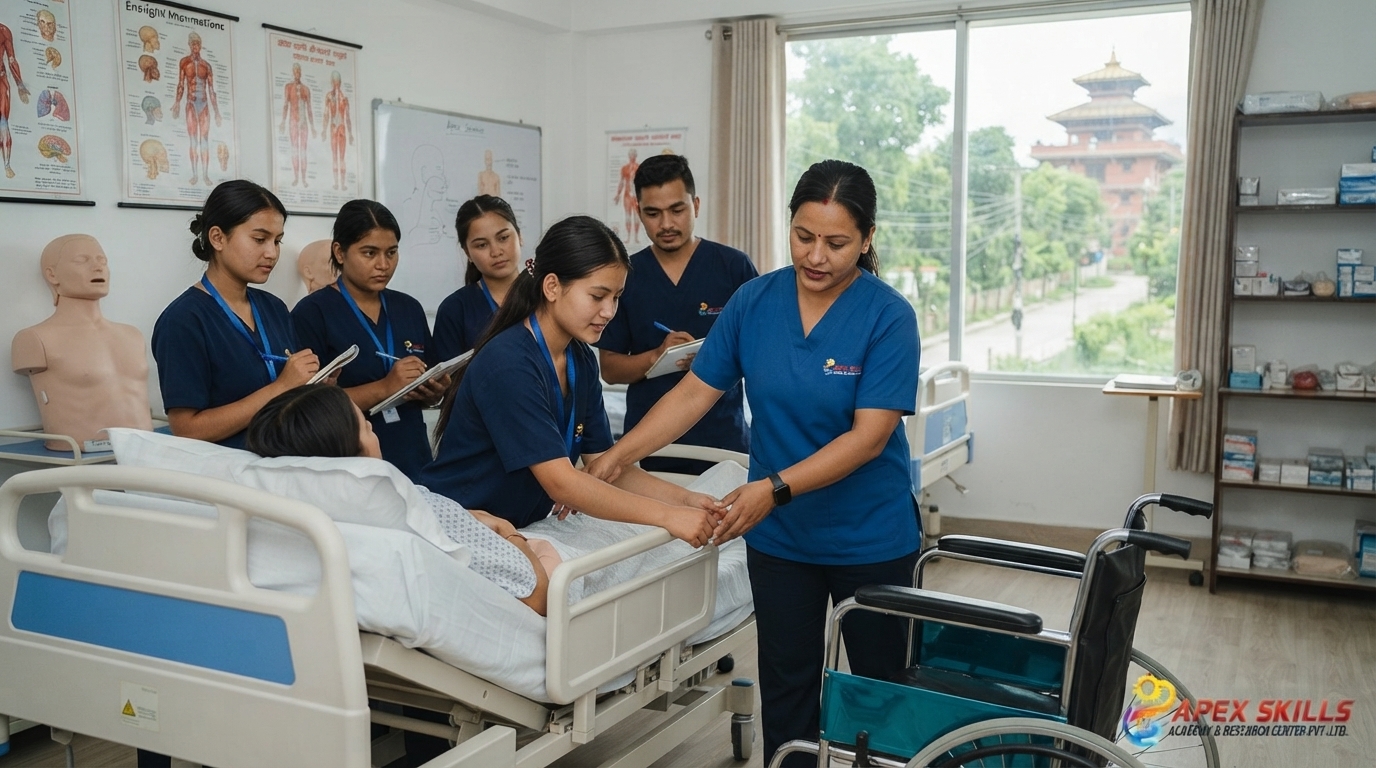
Apex helps to outline the progressions made by the students under the supervise experience on the live models, which will allow them to practice clipper movements, sectioning, blending and styling the basics before they have to worry about the real clients
On the course page you will also find the description of small-batch learning, where instructors monitor student work and correct errors whilst practical work. Class arrangements may change, so you should always verify the current batch size before enrolment
Locations and schedules
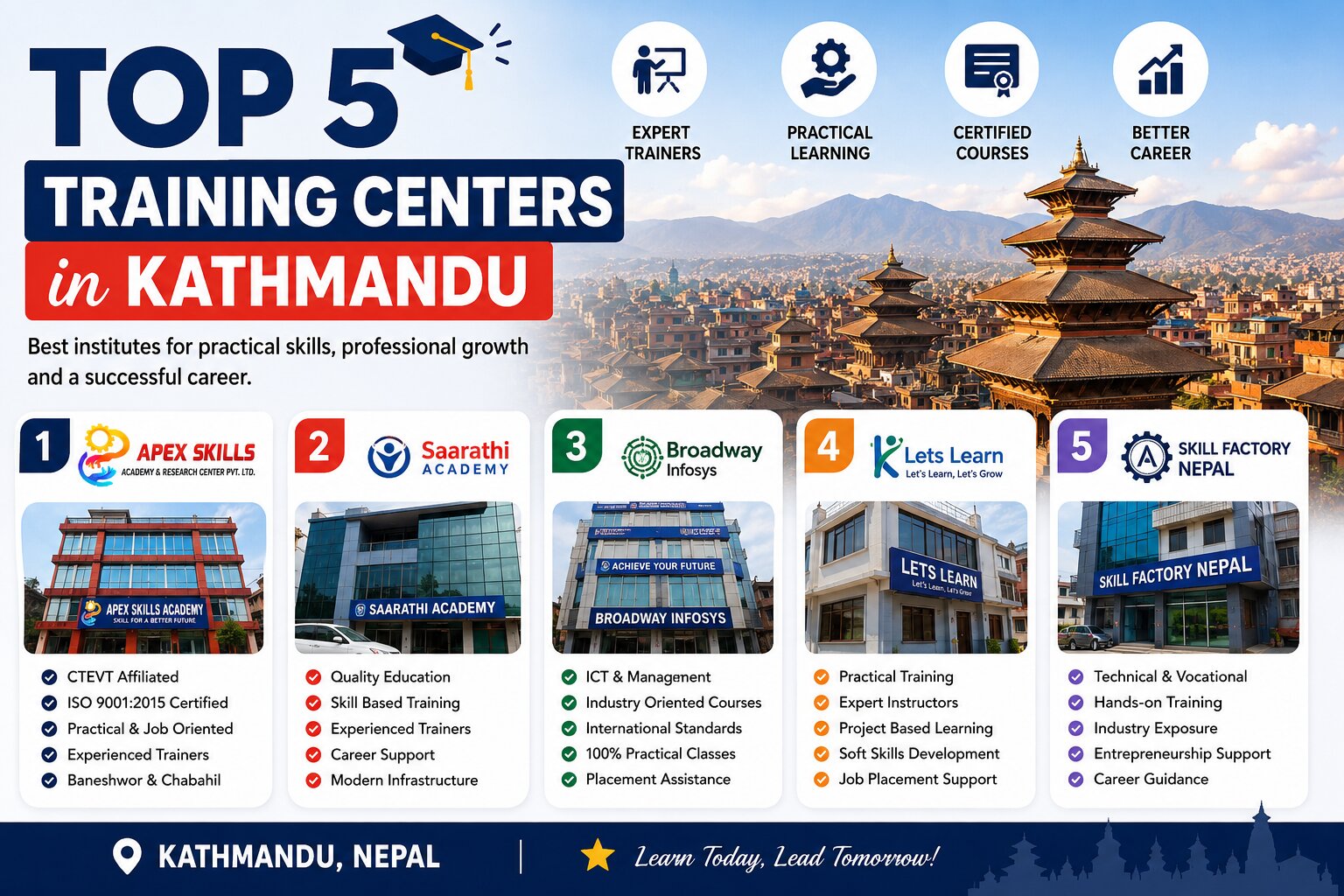
Apex Skills Academy provides both training centers in Kathmandu- and observe more related posts.
Chabahil 07, Gopikrishna.
New Baneshwor, Suruchi Marga.
The schedule specifies morning classes at the branch in Chabahil and evening classes at the branch in New Baneshwor. This might be beneficial for learners who are working, studying or juggling family responsibilities during the day.
Certification and career support
The academy is a CTEVT-affiliated training center, as well as an ISO 9001:2015-certified skills training institute. Albeit future students must Verify the precise certification granted for this individual barbering system, evaluation getting needs, and when any supplemental external appraisal will be desired.
Apex also confirms that it advertises job offers, supplies employer referrals and assists students in setting up their own barber apprenticeships. Inquire about post completion support, orientation to employers, and recent graduate outcomes
Read here full program details “Professional Barber Training in Nepal | Apex Skills Academy”
Compare Fees and Equipment
A low course fee is useful only if you have a clear understanding of what its contents are. Request a complete breakdown of the cost from each Institute.
Check what the fee covers
Compare:
- Tools and equipment.
- Training materials.
- Practical assessment.
- Certificate issuance.
- Products and consumables.
- Replacement certificates.
- Installment charges.
As an instance, Apex Skills Academy mentions NPR 15,000 (Lump sum course fee) & states that training classes (All equipment used and practical materials), mannequin practice, supervised sessions, assessment and certification are all inclusive. Check the current terms before signing up
Inspect the tools and facilities
Training equipment must be of professional practice basis. Find out if the institute provides you with access to:
- Clippers and trimmers.
- Scissors and combs.
- Mannequin heads.
- Barber chairs.
- Wash stations.
- Towels and capes.
- Styling products.
- Adequate lighting and ventilation.
Do the proper inquiry into if the equipment is shared, how it will be sanitized between users and whether students are allowed to work with their own tools.
Understand payment and refund policies
Understand and make sure whether you can pay the total amount in one go or not, inquire about installments if available. Also clarify:
- The payment deadline.
- Missed-class arrangements.
- Course-transfer rules.
- Cancellation and refund conditions.
- Reassessment charges.
- What if this course schedule changes.
Make sure you get these terms in writing, not as a verbal promise.
Verify Certification Carefully
Certifications are great to have on your resumes, but they don't all hold practical meaningful value. Ask them:
- Who issued the certificate?
- What assessment must students pass for certification?
- Is it showing the duration and skills offered with each course?
- Is the institute recognized by any organization?
- Do local employers accept it?
- As well as is the certification itself enough for getting an abroad job or extra necessities are there?
CTEVT affiliation, ISO certification and course level certification are not equivalent. Request clarification from the institute about what organization is associated with the training center, and which designates and issues that actual barber certification for each state.
For international work, you must also check the requirements for the country, company or recruiter where you are going to work. A training certificate may have to be complemented by experience, documentation, linguistic skills, licensing or another assessment.
Look Beyond the Certificate
The first job after training could be at a local barbershop, salon, grooming studio, hotel or as an assistant under the supervision of an experienced barber. Freelance and self-employment are two other alternatives.
Possible career roles after the training include:
- Professional barber.
- Men’s hairstylist.
- Haircut and grooming specialist.
- Beard-grooming specialist.
- Barbershop assistant.
- Salon or grooming-studio staff member.
- Freelance barber.
- Self-employed barber.
- Barbershop owner.
Income depends upon the skill, experience, area, volume of customers, pricing structure, employer and business. So, any institute which promises a fixed salary or job without mentioning the conditions should be avoided.
Ask about job support
An institute of useful will help with:
- Employer introductions.
- Job vacancy updates.
- Interview preparation.
- Internship connections.
- Portfolio development.
- Guidance for opening a shop.
Ask for live proof and concrete examples. Job support available is too broad; graduates are put in touch with partner barbershops and receiving employer references is more measurable.
Price should not be the most important factor in your score. A course with lots of hours of practical training might leave you asking for more training when you finish, even if its initial fee looks very competitive.
Warning Signs Before Enrollment
Think carefully if an institute:
- Refuses to provide a curriculum syllabus.
- Cannot explain the total cost breakdown.
- Promises for a guaranteed job.
- Pressure you to pay fee immediately.
- Has overcrowded practical classes.
- Shows no recent student work.
- Provides limited or no supervised practice
- Has poor tool-cleaning procedures.
- Makes unclear claims about certification.
- Never answered effectively about refunds or reassessment.
- Uses the term “internationally recognized” without identification of the accrediting organization.
Informed questions should be received positively by good training providers. You are not a pain; you are defending your precious time, money and career.
Questions to Ask in the Training Institute
Ask the following questions directly before coming to a closure.
- How long is the whole course?
- How many hours are practical?
- How many students does one instructor get?
- Do I practice on the mannequin heads and live models?
- Will the institute provide me with the Models or should I take them?
- Are tools and materials included?
- What is cutting, shaving, and beard-grooming techniques?
- Assessment of Hygiene and Sanitation
- What if I fail the practical assessment?
- Who issued the certificate?
- Certification/examination fees: Is there any additional per certification, or examination costs?
- Are you given job placement, employer referral support, or intern opportunities?
- Can I see the classroom before enrolling?
- Do you offer morning, evening, Saturday or installment options?
These answers will clarify a real skills program based largely on marketing.
Conclusion: Choose Skills Over Promises
Not the Most Expensive Barber Training in Kathmandu, or Not the Best Advertised It is the program that gives you just enough supervised practice with real clients, teaches you safe and modern techniques, give honest numbers on costs and certification.
Compare the syllabus timing, practical hours, live-model access, class size, instructors’ equipment facilities both for free and full charge with all institute so that you can get real knowledge if you paying for tuition also pay in return should be there career support or not. If you can, visit the institute, straight away ask pointed questions and pick an environment that allows for oz practice.
Do check out the Professional Barber Training in Nepal with Apex Skills Academy if you are interested and wants to build the meaningful carrier in this respective field or fill out the Enquiry form
FAQS
Which are the things to be considered while training in Kathmandu for barber?
Search for a program that includes haircutting, fading, shaving, beard grooming, hygiene, client consultation, live models, assessment and career counseling. Additionally, consider the level of experience of the instructor, class size, tools, facilities, overall fee, certificate and job support.
What is the appropriate amount of hands-on experience to be included in the barber course?
Request an hour by hour breakdown from the institute with demonstrations, theory, mannequin work, live-models work, assessment and portfolio development. There may be a different number of hours, but the institute should make it clear how many hours of supervised practice you will receive.
Is there any cost for the tools for barber courses in Kathmandu, and is there a cost for certification?
Not always. If tuition does not include the following, confirm with the teacher: Registration, equipment usage, training materials, practical assessment, certificate issuing, uniforms, products, and reassessment. Discuss the entire fee schedule in advance, in writing.
Can you be a professional barber by attending a short barbering workshop?
While a short workshop can be helpful in teaching basic techniques, career changers will typically require a course that has repetitive practice, hygiene instruction, client consultation, live models and feedback from the instructor. Select a course level and career objective appropriate to current skill and career objective.
What are some questions to ask when considering taking a barber course?
Inquire about course length, class size, live-modes, tools provided, evaluation, certification, make-up policy, extra fees, employment assistance and facility tours.