An older person can have someone who has more experience caring for them to help them live their daily life safely, comfortably, and with dignity. The job might be different for everyone. There is a need to assist some older people to get dressed and bathed. There is a need to assist some older people with bathing and dressing. Some may require assistance in eating, getting around, taking medication, or regular health check-ups. Others simply require human interaction, as they are alone or only have minimal family contact. The caregiver becomes a safe, trusted contact for the older adult to stay safe and active. Home-based personal care workers assist individuals with daily activities that are restricted due to aging, sickness, injury, or other circumstances, says the World Health Organization. Some of these may be related to personal care or moving around in the house. Care work also includes the implementation of an agreed care plan and co-working with health professionals if required.
Before selecting elderly care as a profession, it is essential to comprehend the position. A caregiver is not just a person who "stays with the elderly. There are numerous tasks to do in the work that need care and good judgment. Caregivers might cook breakfast, help with bathing and making sure the person is comfortable, and aid in moving around the home safely. Later, the same caregiver can assist with a visit to a clinic or provide information to the family about a change in the older person's health. The caregiver should also be aware of tasks beyond his or her scope of responsibility. It is important for decisions related to health to be made by qualified health workers. Caregiving is a good thing to do but not to deprive the older person of their independence. It involves providing the appropriate support and enabling the person to do as much as they can safely do.
What is an elderly caregiver?
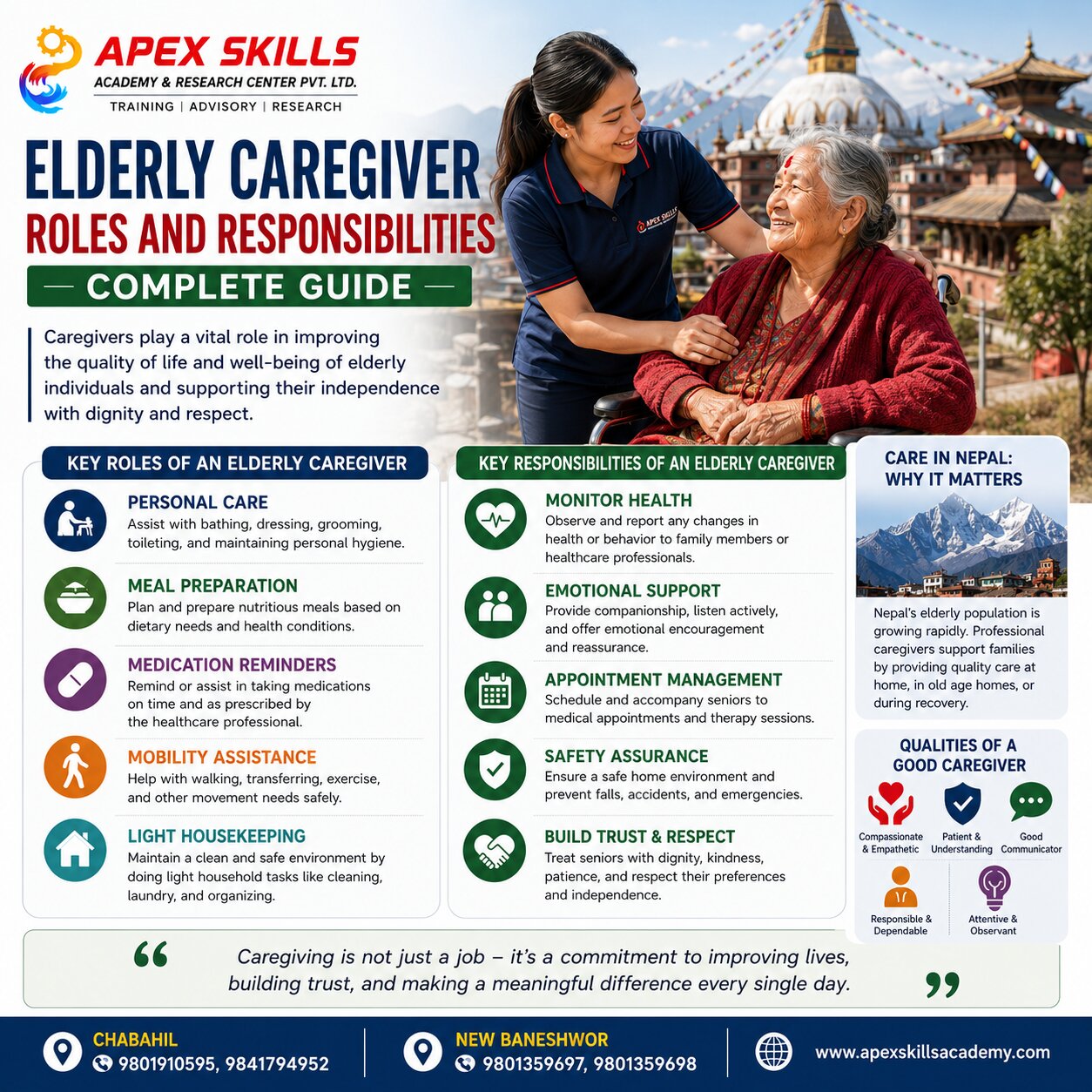
An elderly caregiver is someone that cares for an older person regularly in their daily lives. The caregiver can be employed in a private house, elderly home, care home, hospital, or care setting. The amount of assistance needed depends on the older person's condition and abilities regarding health, age, mobility, memory, and individual needs. Some people need assistance only in eating and housekeeping. One may require assistance in almost all areas of the day. The first step is for the caregiver to learn what the person can do for themselves and what type of assistance is required. This helps to guarantee prevention of neglect and unnecessary dependence. Common caregiving tasks include things such as personal care, food preparation, household tasks, health care support, and medical coordination, according to the National Institute on Aging.
The Main Goal of Elderly Care
The primary objective is to maximize an older person's safety, comfort, and independence. A good caretaker does not care for an older person as a child. Old age is not an excuse for not having the right to choose in day-to-day activities. The caregiver should ask permission and describe in detail what is being done before providing personal care. This is a straightforward solution that helps to foster trust and dignity. The caregiver also monitors for signs of change that might indicate a health problem. Changes to walking or eating, sleeping, mood, or behavior could require attention. Care should be grounded on the individual's needs and not on a prescribed schedule, which fails to consider his/her preferences. Good care is about supportiveness, not controlling.
Daily Personal Care Responsibilities
One of the most prevalent areas of providing care for the elderly is the provision of personal care. As a person gets older, they may become weaker, lose their balance, have their vision get worse, or not be able to move as much as they used to. Other people may also suffer from diseases that make it difficult to perform normal tasks. A caregiver may be able to assist with the physical aspect of the job without taking away the person's participation. It's not to do all their work for them. The goal is to ensure tasks are done safely when they cannot do them on their own. Activities of daily living are bathing, dressing, eating, using the toilet, getting out of bed, and mobility. WHO uses these activities in its description of the daily needs of people of older age.
Bathing, Dressing, and Grooming
Take your time in the bath; don't rush it, as wet floors can be a serious fall hazard. The caregiver can set up the bathroom, put out clean clothes, check the water, and be around in case of an accident. An individual who is older should be provided with as much privacy as possible while the process is going on. Clothing/Ropa may be the selection of appropriate clothing or assistance with buttons, zippers, socks, or shoes. Grooming can consist of basic care, such as brushing hair, cleaning teeth, shaving, trimming nails, and more. These tasks might appear to be minor, but they can make a difference in comfort and confidence. An older person's appearance may enhance his/her sense of self if it is clean. It is also important for caregivers to monitor skin for signs of redness, wounds, swelling, or other changes and to report any concerns as appropriate.
Toileting and Mobility Support
Sensitive care and respect are important at each stage of the toileting process when caring for the elderly. A few older people require assistance to reach the toilet due to weak legs or poor balance. Others may be given walking sticks, a commode, and other support. A caregiver may be able to assist the person to move in a safe manner without pulling or unsafe lifting. Correct body movement is important because incorrect movements can injure the caregiver and/or the older person. Mobility support is aiding getting out of bed, into a chair, or between rooms. An area of walking should be kept clear, and items of use should be kept within easy reach for the caregiver. Safe movement maintains older people's activity and helps to minimize the risk of injury.
Food, Water, and Nutrition
A caregiver's daily responsibility also includes food support. A person who is older may not have the same appetite as they did when they were younger or may require a special diet due to a medical condition. The caregiver can make simple food, feed and water the fussy child, and monitor if the child changes their eating habits. Feeding assistance can also be required if the senior has weak hands, poor eyesight, or a problem transferring the food from a plate. Caregivers must adhere to the care plan and any directions by qualified health workers. They should not make medical diets or alter treatment without proper advice. Any weight loss, difficulty in swallowing, frequent vomiting, or sudden loss of appetite should be reported. A healthy diet helps to maintain strength, energy, and overall good health.
Health & Safety Responsibilities
The elderly caregiver is a vital part of health and safety in day-to-day life, but this is not a substitute for a doctor or nurse. The older person is more likely to be cared for by the caregiver than by any other care team member. This is because they might be the first to see any changes. They can make simple observations and communicate with family members or health workers. The caregiver can also aid the older person in carrying out an already in place care plan. This may involve whether someone goes to appointments, maintains health records, and reminds the person to take medicine on time. Care workers are defined as individuals who, in the course of their work, normally have care plans and work under suitable professional supervision, according to WHO.
Support for medicines and health records
Errors in medicine support can have serious consequences, so it's important to get it right. A caregiver can remind an older person when medicine should be taken or arrange information about medicines. Specific tasks will vary based on the individual care plan and local regulations. If the medication has a particular name, time, and instructions, the caregiver should be familiar with names, time, and instructions. They should never guess a dose or decide on stopping medicine! The National Institute on Aging recommends a clear medication list and monitoring of time and dosage prescribed by the doctor. It also advises against the use of a combination of medicines or using them in the wrong way.
Care can be made easier with health records as well. When necessary, a caregiver could document meals, water, sleep, movement, appointments, behavioral changes, etc. Note-taking promotes understanding by families and health workers of what occurred during the day. The caregiver should ensure that personal information is kept confidential and only shared with those who have a valid reason for having access to it. The key to making good records is simplicity. Sometimes simple facts will suffice. A caregiver might record, for instance, that the individual ate half of lunch, slept poorly that night, or walked poorly in the morning.
Fall Prevention and Home Safety
Falls are a major issue for older people, particularly for those who find it difficult to maintain balance or move about. It is important to inspect the home for potential hazards. Rugs, wet floors, insufficient lighting, clutter, and objects in pathways can be issues. Items that are used on a regular basis should be stored within easy reach of the older person. Additional support may be required for bathroom facilities, as water can cause slip hazards. Additionally, the caregiver needs to ensure that any walking aids used are used properly. Safety checks should occur each day as part of the care and maintenance, not after there has been an accident. The following are recommendations from the National Institute on Aging about steps you can take at home to minimize the dangers of falls and hazardous household objects.
If a caregiver needs to get medical assistance
It's important a caregiver understands when the situation requires professional assistance. If there is serious difficulty breathing, chest pain, heavy bleeding, loss of consciousness, a large injury, or other life-threatening symptoms, these should not be treated by guesswork. The caregiver is to act according to the instructions in the family/health team's emergency plan. They should be cool and provide clear details about what has happened. Other less urgent changes to report to a caregiver include unusual confusion, repeated falls, fever, sudden weakness, or significant eating changes. Reporting as early as possible will allow the care team to act sooner. The role of the caregiver is to observe, encourage, record, and report. It's not for the purpose of making a diagnosis with the elderly person.
Emotional and Social Support
Physical care is just one aspect of elderly care. Older adults require friendship, conversation, and a sense of connection as well. No one must feel alone when they have food on their table, medicine, and a clean home. A caregiver can engage in simple activities with the person, such as spending time talking, listening, reading with the person, or going for a walk. These moments can help to make the day more normal and meaningful. The caregiver should find out what the older person likes, rather than picking activities for him/her. Others enjoy listening to music or reading books. Others like to cook, garden, do religious activities, watch television, play games, or reminisce about family experiences. Social support should be in line with the person's interests and abilities.
Companionship and Mental Wellbeing
One of the most important aspects of caring can be companionship. The adult who cares for the older person might be the chief person that the older person talks to throughout the day. When listening, avoid rushing and give the person a sense of respect. The carer may allow for safe social interaction with family, friends, neighbors, or groups within the community. They may also be useful to help keep a person interested in the daily routine, such as simple hobbies. An alteration of mood is not to be overlooked. If there is sadness, fear, confusion, anger, withdrawal, or unusual behavior that is ongoing, it should be discussed with the relevant family member or health worker. The caregiver should NOT blame the older person for their hard feelings. At times a presence and an ear are the best help.
Supporting people who are older with memory problems
Extra structure and patience may be required for adults who are older and have memory issues. Simple reminders, a calendar, notes, familiar routines, and clear instructions can be used by a caregiver. For individuals with cognitive difficulties, the National Institute on Aging offers practical solutions like reminders, calendars, and safety aids. Do not argue with the person when he or she is confused. Giving a simple answer may be better than giving a lengthy answer. When memory issues cause problems with judgment, the home needs to be evaluated for safety hazards as well. The emphasis should be on abilities and not solely on loss.
Understanding Respecting Privacy and Personal Choice
Respect is the core of high-quality aged care. Elderly people have their own habits, beliefs, likes/dislikes, and stories of life. Before approaching anyone's personal items or private areas, a caregiver should ask. They should verbalize what they are about to do for their personal care prior to doing the task. Wherever possible, the older person should have a choice, for example, in clothes or in when to take a walk. Bathing, dressing, toileting, and talking about health are areas of concern with privacy. Also, a caregiver should refrain from talking about the person when they are not there. It is as significant to treat him or her with dignity as it is to assist him or her in physical matters.
Support for household and daily living tasks
Even for older adults that can carry out some personal care, there are things around the house that require assistance. Difficulty in cleaning and shopping because of weakness, pain, poor vision, or limited movement. The caregiver can assist with maintaining living space cleanliness and organization. They can wash clothes, cook food, shop for essentials, or perform basic household chores. These responsibilities should be in line with the person's care and not make the person a general house worker. Duties should be agreed upon prior to the work being done. Defining expectations is good for both the older person and the caregiver. The aim is to have a safe and comfortable home.
Cooking, cleaning, and laundry.
The cooking should be appropriate for the person's nutritional requirements and personal tastes. If necessary, the caregiver can cook breakfast, lunch, dinner, and simple snacks. They should maintain the safety and cleanliness of the food and food preparation surfaces after use. Areas that the older person uses, particularly bedrooms, bathrooms, kitchens, and walking areas, can be the focus of cleaning. Washing, drying, folding, and storing clothes away may be included in laundry. These can be included in the routine of the day! The child's carer should also be aware of hazards when cleaning. Some strong cleaners, hot surfaces, sharp tools, and wet floors may pose a risk if not used safely.
Visits for shopping and medical purposes
Shopping assistance can be arranged for the purchase of food, household chores, hygiene, and approved items. Use of a clear list and receipts should be used by the caregiver as needed. With medical visits, you can help with preparation, transportation, carrying important medical information, and assisting with communication. It is important that a caregiver write down questions before an appointment to ensure important information isn't forgotten. They may also be able to take notes from the health professional when asked. The caregiver is not to make treatment decisions based on their own views. Their job is to assist the older person to comprehend and adhere to medical suggestions.
Communication and Family Support
Communication is the key to organizing elderly care. A caregiver will be in regular contact with family members, doctors, nurses, therapists, and other care workers. There may be different components of the care plan for each person. The following information must be shared with the caregiver in a useful way without causing confusion. Family members may wish to be given regular updates on what is happening with meals, sleep, exercises, appointments, and mood. There may be a need for more specific information from health workers regarding symptom changes or changes in daily functioning. Clear communication = everyone works for a common purpose. It also ensures that no small issues go unnoticed.
Working with Families and Health Workers
Caregivers should be aware of the responsibilities of everyone. Family members can manage finances, legal issues, or other significant decisions. The choice of treatment of the illness is made by the nurse or doctor in their capacity as professionals. The daily support is given by the caregiver. WHO recommendations emphasize the importance of differentiating care responsibilities in a care network. This way, no one will be taking on the responsibility of another. It also provides the older person with more support. A team with a good attitude performs better than a group of individuals, each with their own set of directions.
Reporting changes in health and behavior
It's important for a caregiver to see changes, as part of the job is to watch for them every day. They may see the older person sleeping more, eating less, walking in a different way or appearing unusually confused. Sometimes a single change is not necessarily an indication of a serious issue. However, any changes (unusual or sudden) should be communicated as per the care plan. Clear facts are used in good reporting and not guesses. When someone does not eat breakfast, it's not as helpful to say that they're getting unhealthy as it is to say that they didn't eat breakfast. Documenting the time of the change can also assist health workers in understanding.
List the skills that an elderly caregiver should possess.
There are two types of skills a good caregiver must have: skills and people skills. Tasks can be taught like personal hygiene, nutrition, first aid, safe movement, and basic care. But just because somebody knows about technology doesn't mean that they are good caregivers. Patience, kindness, clear communication, and respect are also important traits of the person. Routine care can be exhausting, as there may be various needs each day. A caregiver will need to remain calm if an older person is slow, confused, upset, or refuses help. They also need to know when they are over their limit and when they need assistance when they cannot do something.
First Aid and Basic Care Skills
First aid can be useful, as it does not always occur in the care center or at home. Basic first aid, hygiene, nutrition, emergency response, and safe care practices are topics that might be included in the training of caregivers. The CTEVT caregiver training programmed in Nepal covers topics like handling first aid, hygiene, nutrition, emergency care, comfort measures, etc., and monitoring the well-being of clients. It also covers issues that older people may experience, including urinary issues, constipation, joint pain, back pain, prevention of bedsores, simple exercise, oxygen care, and sponge bathing. These are the skills that will enable caregivers to have a more solid foundation for their daily activities. Thorough training can also enable them to know when to seek professional medical attention.
Patience, empathy, and communication skills
One of the greatest attributes of good elderly care may be patience. Elderly people might have a slower movement response, speech, and eating and drinking and may not be able to do simple tasks as quickly as they used to. The hurried caregiver can make the individual feel helpless. A caring person provides sufficient time and maintains the organization of the day. Empathy is important because it enables the caregiver to see things from the other person's point of view and understand how they may feel when some of their independence is taken away. Communication helps to alleviate fear, too. Earning respect with simple words, a calming voice, and respectful questions can make difficult tasks easier. These are all things that can't be replaced with equipment or technology.
Want to Develop These Caregiving Skills Professionally?
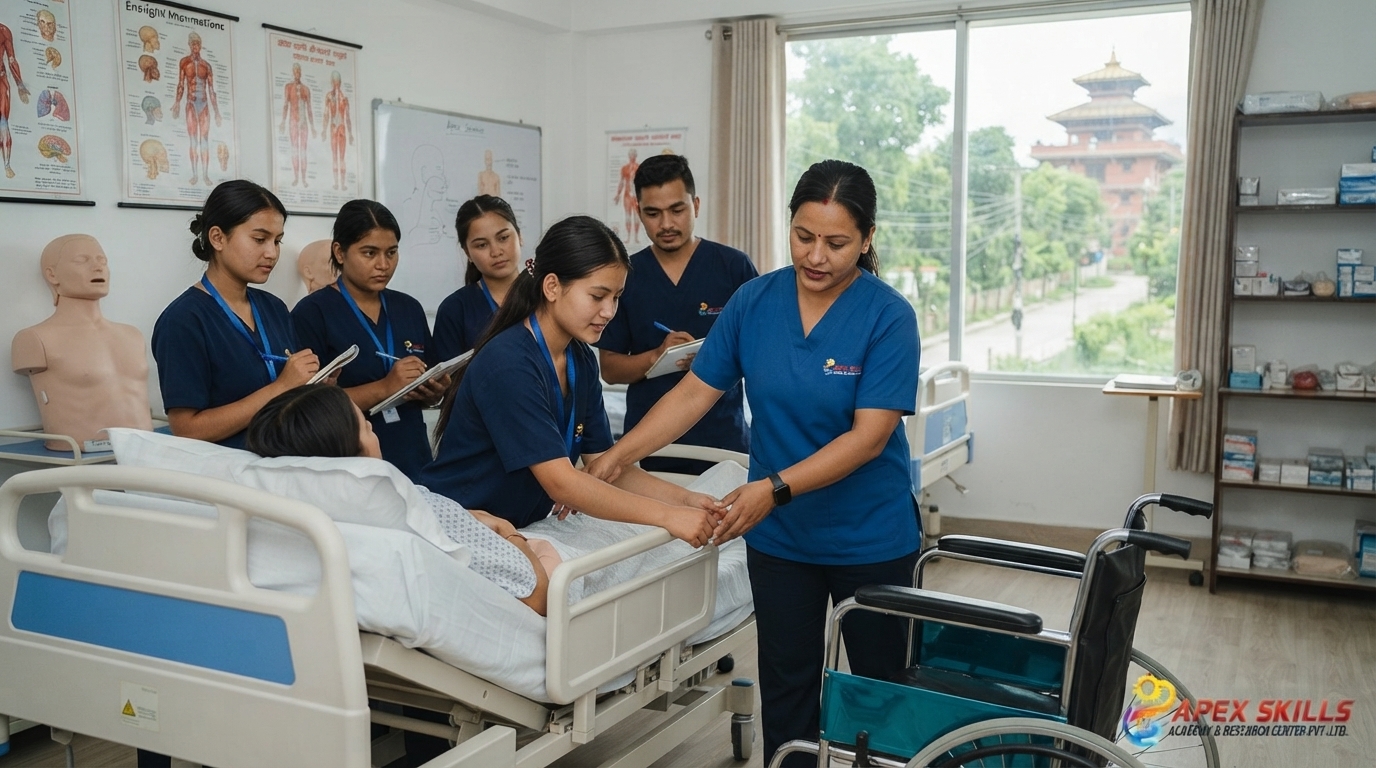
Understanding the responsibilities of an elderly caregiver is an important first step, but developing these skills through structured practical training can help you become more confident and prepared for real caregiving situations. If you are looking to build these skills in Nepal, explore our Elderly Caregiver Training in Nepal, which covers personal care, mobility assistance, nutrition, dementia awareness, infection prevention, first aid, communication, and other essential caregiving skills.
A typical daily routine for an elderly caregiver
A 'typical day' is dependent on the needs of the individual and the care plan. The first step in the process may be to review the older adult's sleeping habits and “how he feels” in the morning. They can subsequently assist with washing, dressing, toileting, breakfast, and moving. They can help with food prep, medicine schedules, cleaning up important spaces, and other activities that require safety during the day. They can also be able to offer support and companionship as well as making appointments or communicating with family members. The evening provides them with assistance with dinner, personal care, bedtime routines, and safety checks. The caregiver could also write down information that is important for the next caregiver or the family member. The routine offers structure, and good care will leave room for the person's choices.
Conclusion
An elderly caregiver does more than just reside with the elderly person. This job has personal care, daily support, safety, companionship, household help, and communication aspects. In the morning a caregiver can help bathe you, prepare food at noon, go to the doctor later, and be with you in the evening. Specific tasks will be determined by the individual's care plan and needs. Good care safeguards safety and helps to maintain individual independence and dignity. The caregiver should be familiar with the steps to take, the information to report, and when to seek professional assistance. If you are interested in this career, you can get a solid start in working with the elderly if you receive the proper training as a caregiver. The CTEVT caregiver curriculum addresses several helpful topics in Nepal, such as health, hygiene, nutrition, emergency care, and client support.
FAQs About Elderly Caregiver Roles and Responsibilities
-
Which is the primary duty of an old caregiver?
This involves assisting an older person to live daily life safely and comfortably. This may involve personal care, feeding, mobility, chores, comfort, and companionship, as well as care within a pre-established care plan. The caregiver also should be aware of significant changes and alert the appropriate individual.
-
Elderly caregiver gives medicine?
Reminds an older person about medicine or offers medicine support as part of the caregiver's role and care plan. They should not alter dosages, discontinue treatment, or make medical decisions without the proper medical guidance. Use of medicines must be guided by the local rules and instructions of qualified health personnel.
-
What kind of personal care does an old-age person give?
Personal care may involve bathing, dressing, grooming, toileting, feeding, and walking safely. The amount of assistance will depend on the older person's ability to function independently. A good caregiver enables a person's independence rather than performing all tasks for the person.
-
Is there a need for training for an elderly caregiver?
Training is very beneficial because elderly care requires safety skills and hygiene, nutrition, first aid skills, communication, and basic care skills. The CTEVT caregiver curriculum includes some of these areas. Education can assist a new caregiver in the proper care techniques and identify situations requiring professional intervention.
-
Is it possible for older people to be able to work abroad?
Yes, trained caregivers can work in other countries if they comply with the training, language, visa, and employment criteria. The specific requirements vary according to type of job and foreign country. Individuals intending to work overseas should consult with the current regulations of the country they wish to work in before making their applications.