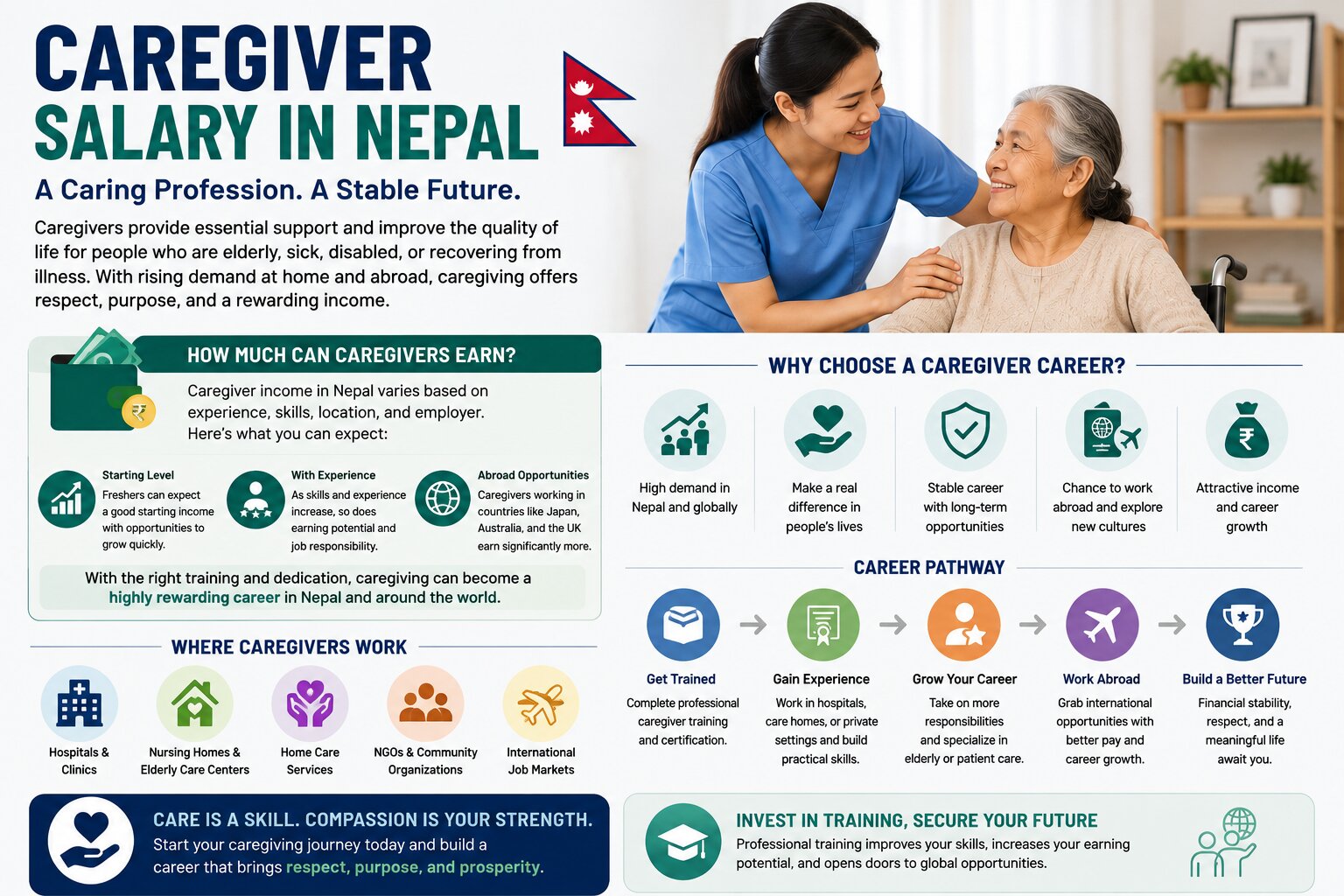
The need to take care of the elderly, provide patient assistance, provide disability care, and provide home-based care is rising in Nepal, making caregiving a rising career choice. When it comes to the question of caregiver training, one of the most common questions is, how much money will you be able to earn by being a caregiver after training in Nepal?
The answer to this question depends upon the various factors such as training, certification, experience, location, type of employer, working hours, responsibilities, working places, and so on.
Typically, an entry-level caregiver position in Nepal will get their salary around NPR 20,000-35,000 per month, but with experienced caregivers, especially with the ones who are specialized, they can earn up to NPR 40,000-60,000 or higher, depending upon the duties and the employer demand. These are the estimations based on the market, not a government-determined caregiver pay scale.
If you're interested in working overseas and are trained, you can make more money. The figures, however, for overseas salaries should always be considered and come with taxes, accommodation, food, insurance, transportation, and other deductions.
Overview of the salary of caregivers in Nepal
|
Caregiver Level |
Indicative Monthly Earnings |
|
Fresher / Entry Level |
NPR 20,000–25,000 |
|
Trained Caregiver |
NPR 25,000–40,000 |
|
Experienced Caregiver |
NPR 40,000–60,000+ |
|
Specialized / Premium Live-in Care |
NPR 50,000+ in some arrangements |
|
Overseas Caregiver |
Varies significantly by country and contract |
In Nepal no single salary is applicable for all the caregivers. The compensation, job duties, hours, and/or qualifications of a caregiver can be based on the needs of the person for whom care is given, the responsibilities of the caregiver, the caregiver's experience, and the caregiver's skill.
What is the salary of a caregiver in Nepal?
In Nepal, there is a wide range of income for caregivers. Those who want to make or are thinking of starting a career as a caregiver might get hired at a lower wage rate, while individuals who have experienced professional training, practical experience, and special caregiving skills may earn higher-paying jobs.
The overall market estimates for caregiver wages in Nepal are in the range of NPR 20,000–NPR 60,000+ per month but may vary depending on the job.
For instance, a fresher home-care assistant could earn a different amount compared to a Home Assistant needed to look after an elderly person who needs constant care.
Caregiver Salary in Kathmandu
With the high density of hospitals, private healthcare providers, elderly homes, rehabilitation facilities, and families in need of home-care assistance, there are options for caregiving in Kathmandu and the surrounding valley.
- Private homes
- Elderly care facilities
- Healthcare support settings, such as hospitals
- Rehabilitation centers
- Care homes
- Disability support services
- Home-care services
Entry-level home care/hospital support positions might pay NPR 20,000–35,000 per month. Those who provide more advanced and specialized care or live-in 24-hour care may receive significantly higher compensation, depending on the nature of the care.
Caregiver Salary Based on Experience
1. Fresher Caregiver Salary
A new caregiver can start at around NPR 20,000 - 25,000 per month, depending on their level of training. Basic skills in caring, reliability, communication skills, and the ability to support clients safely with their daily activities are the desired skills that employers will seek.
2. Trained and Certified Caregiver Salary
A caregiver with structured professional training and who can provide evidence of skills could be provided with better opportunities. The salary will range around NPR 25,000–40,000 per month, depending on the employer and job position. While training will not necessarily lead to a higher salary, it will be beneficial to employability.
3. Experienced Caregiver Salary
After a few years of hands-on experience, those who care for the children can find more challenging jobs. Skilled caregivers may be able to make approximately NPR 40,000 to NPR 60,000 or more monthly, especially if the position has a lot of duties, entails live-in care or is specialized.
4. Specialized Caregiver Salary
In some cases, a caregiver earning extra skills might be able to receive a higher pay rate. [1][2]
- Elderly care
- Dementia support
- Disability care
- Post-hospital care
- Mobility assistance
- Palliative-care support
- Live-in caregiving
- Specialized patient assistance
The actual salary would be dependent on the employer, the requirements of the client, the schedule, and the responsibility.
Does the training of caregivers boost your salary?
Professional training can help an individual get a job but does not always provide a specific wage. It is mainly useful in providing candidates with skills that might be required by employers in their recruitment of caregivers.
The theoretical part of the CTEVT caregiver course is 67 hours, and the practical/project part of the course is 323 hours, totaling 390 hours of the course, which includes
OSH is a component of the components of quality. OSH is part of the components of quality.
- Nutrition and balanced diet
- Comfort management
- Psychosocial assessment
- Health-related equipment
- Exercise and recreational activities
- Personnel and environmental cleanliness
- Occupation, safety, and health
- Practical caregiving activities
- Psychosocial assessment
What do you learn in caregiving training?
A good caregiver training program should give you skills that can be applied in actual care situations.
Personal hygiene and daily care
Assist clients in bathing, dressing, grooming, and toileting and other personal-care activities.
Receives nutrition and feeding support
The training can familiarize caregivers with balanced nutrition and meal support and safe feeding procedures.
Mobility Assistance
Care providers might have to assist an elderly person or someone with physical impairment to move safely, change position, or engage in proper activities.
Health and Well-Being Monitoring
Caregivers develop awareness of the physical and psychological changes of a client and report accordingly.
First Aid and Emergency Awareness
A good caregiver should possess basic emergency and first aid knowledge.
Communication
Caring staff are closely involved with clients, families, and health care professionals. So good communication and patience are critical.
What jobs can you get after caregiver training?
Upon completion, caregiver training can pave the way to several career opportunities depending on the qualifications and experience a person has.
- Home caregiver
- Elderly caregiver
- Patient care assistant
- Hospital caregiver/support worker
- Care-home caregiver
- Rehabilitation support worker
- Disability support worker
- Private-home caregiver
- Child-care support worker
- Hospice or palliative-care support worker
The CTEVT caregiver curriculum points to work settings such as private homes, elderly homes, hospitals and health centers, rehabilitation centers, and private care centers in Nepal and other countries.
Nepal and abroad comparison of the caregiver salary
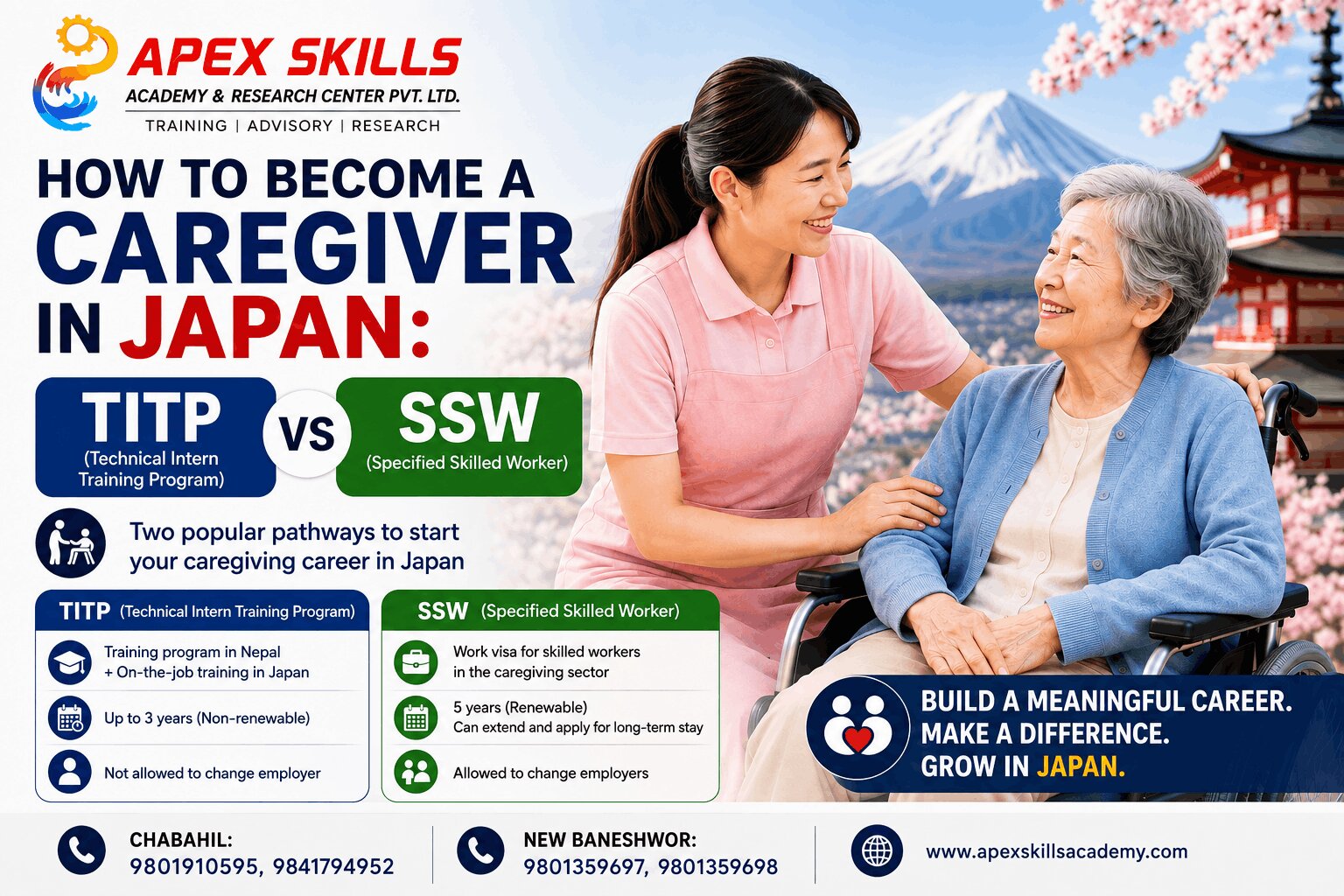
A primary reason for people to decide to go for caregiver training is the opportunity to work overseas. In countries like Japan and Israel, there are labor programs in which care is a significant career.
It is not appropriate to compare overseas salaries with Nepalese salaries without considering the cost of living and employment conditions. Gross salary may vary depending on factors like accommodation, food, insurance, tax, transportation, and other deductions.
Caregivers’ salary in Israel for Nepali workers
Nepal opened the applications for 2300 positions of caregiver in the long-term care sector in Israel under the Nepal-Israel labor agreement in 2026. The published salary is around NIS 6,443.65 per month, or around NPR 347,000–348,000, based on the exchange rate.
This is not a promise of take-home pay. Candidates are advised to consider the employment contract, deductions, and cost of living before comparing it with the salary in Nepal.
Caregiver's Salary in Japan for Nepali Workers
Another place where Nepalis are interested in taking up work in caregiving is Japan. Ongoing market demands may differ based on the language proficiency in Japanese, gross earnings, experience, overtime, and location, but around NPR 1.3 lakh–1.85 lakh per month is expected for caregivers.
Before taking on an overseas caregiver role, do verify:
- Basic salary
- Overtime rate
- Working hours
- Accommodation
- Food expenses
- Insurance
- Taxes and deductions
- Visa conditions
- Contract duration
- Recruitment costs
- Language requirements
- Employer details
Influencing factors for the salary of caregivers in Nepal
Training and Certification: Relevant professional training can be added to your CV and show that you have structured caring skills.
Experience: When applying for a position, work experience instills more confidence in the employers' ability to deal with actual caregiving scenarios.
Location: Location plays a crucial role for the caregiver salary; those who are employed in the cities get better payment than those who are in the village area.
Employer: Private families, hospitals, care homes, rehabilitation centers, and home-care providers may have different salary structures.
Type of Care: Responsibilities vary with the mobility, disability, health status, and support needs of a client.
Working Hours: Live-in and extended hours work may be different from standard hours and may have different benefits.
Specialized Skills: Apart from the training skills, other skills can make a candidate more appealing for certain jobs.
Communication & Language Skills: Good communication skills are important; foreign language skills can be useful if looking for work abroad.
Skills that can help caregivers earn more
- Elderly care
- Dementia care
- Disability support
- First aid
- Patient mobility
- Personal hygiene assistance
- Nutrition support
- Basic health observation
- Communication and counseling
- Documentation and reporting
- Foreign language skills
- Cross-cultural communication
Training, work experience, and expert skills can place a caregiver in a more competitive job market.
Career Growth and Options after Caregiver Training
The potential pathway is
- Caregiver Trainee
- Entry-Level Caregiver
- Experienced Caregiver
- Specialized Caregiver
- Senior Caregiver
- Overseas Caregiver / Care Coordinator.
The exact path will be dependent on education, experience, further training, and employment. An experienced carer might also consider home care services on their own.
Is Caregiver Training Worth It in Nepal?
Caregiver training is a vocational career choice that makes sense for those interested in health services, the care of the elderly, and serving others. It provides an opportunity to gain the skills for the employment opportunities without studying the academic program.
- Help build confidence
- Develop practical caring skills
- Understand professional responsibilities
- Improve employability
- Prepare for local caregiver jobs
- Develop experience for career advancement
- Develop a foundation for overseas opportunities
Check the course content, hands-on training, certificate or affiliation requirements, trainers, facilities, and job-placement assistance before signing up.
How to Choose the Right Caregiver Training Institute?
- What is the duration of the course?
- Is the course based on a recognized curriculum?
- How much practical training is provided?
- Who conducts the practical sessions?
- What certificate will I receive?
- Does the institute have affiliation/recognition from the concerned authority?
- Are caregiving tools and equipment available for practice?
- Does the institute provide career guidance?
- Is job-placement assistance available?
- What are the total course fees and other costs?
Avoid selecting a course just for the promise of a good salary upon completion. Caregiver careers are developed through training, skills, experience, and professional conduct.
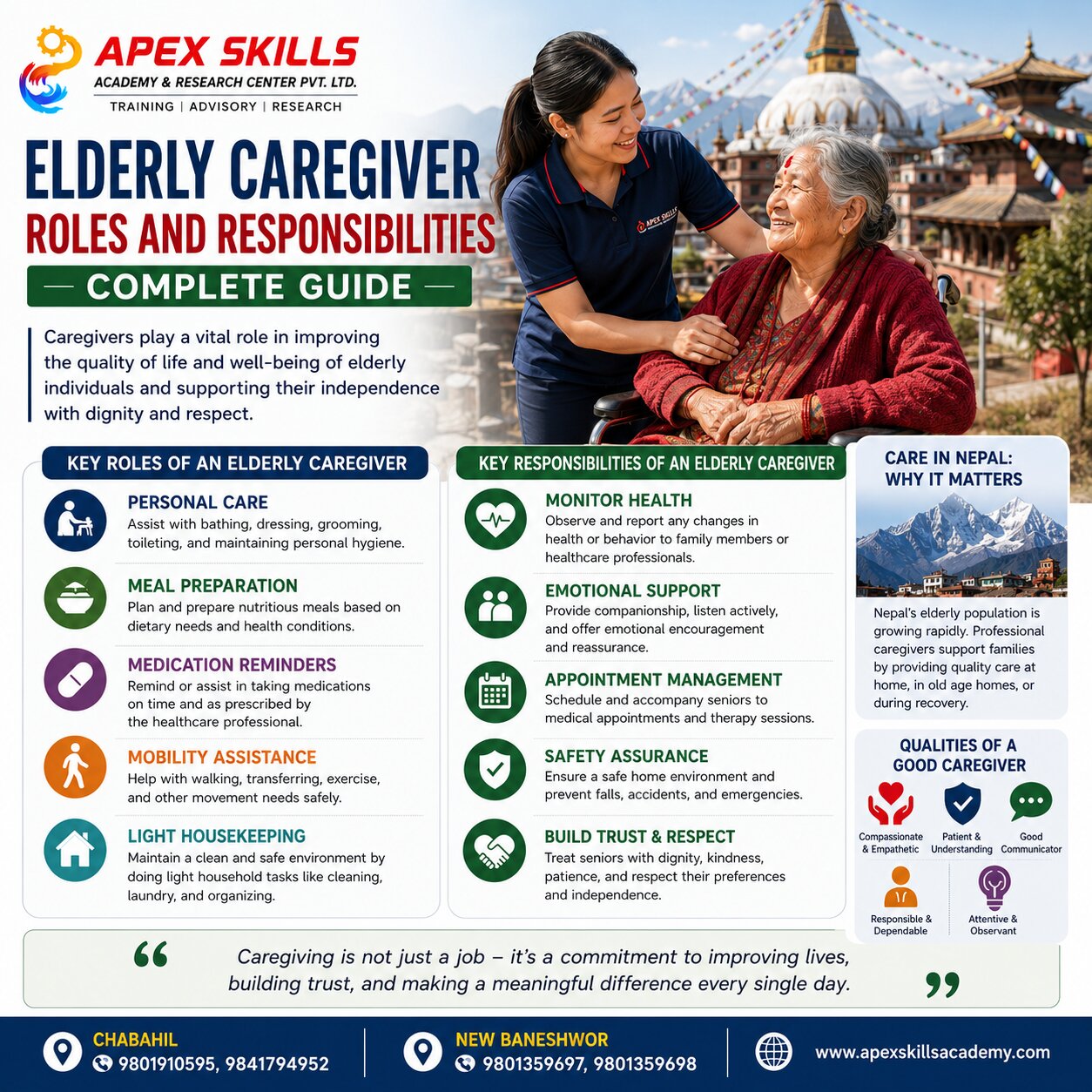
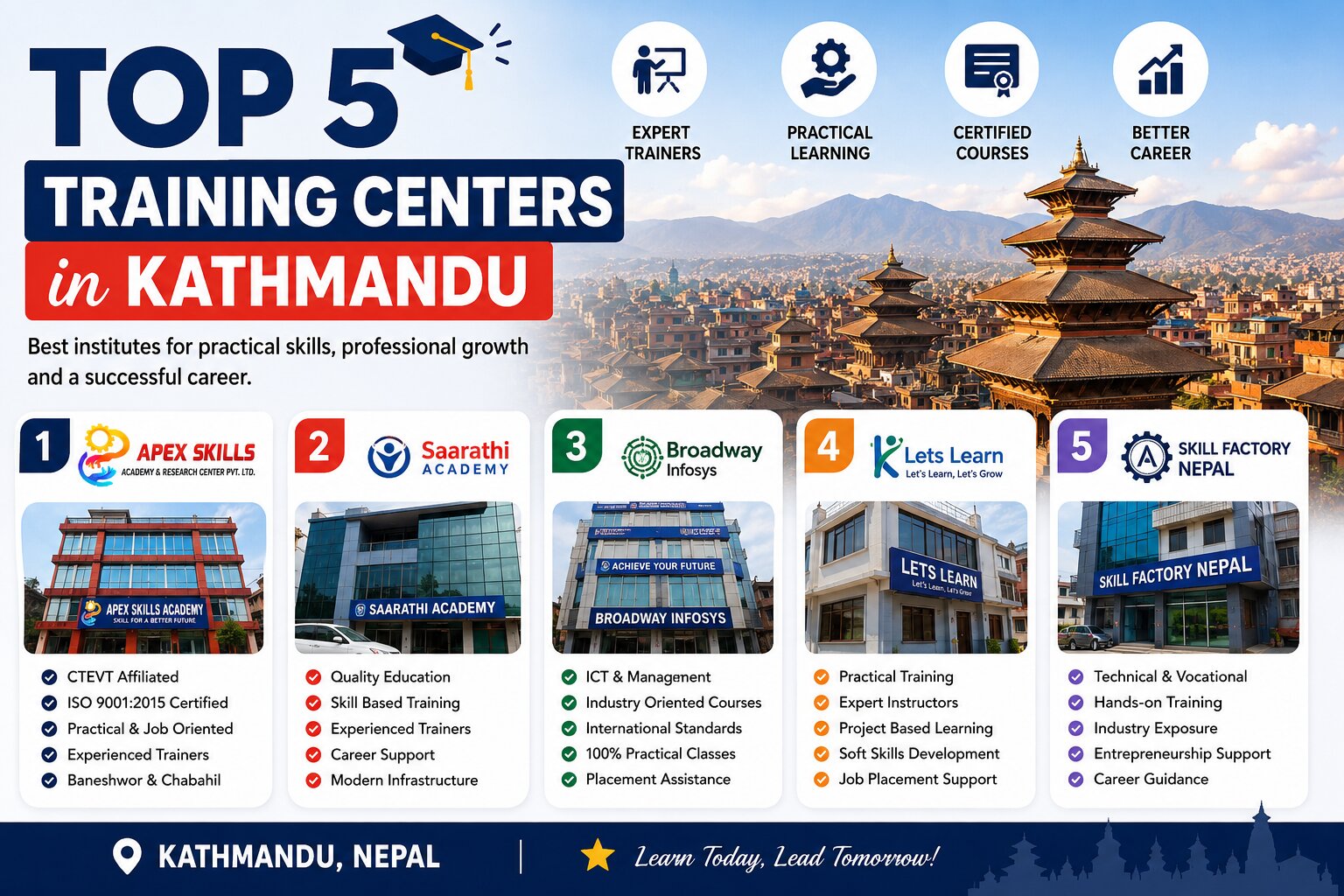
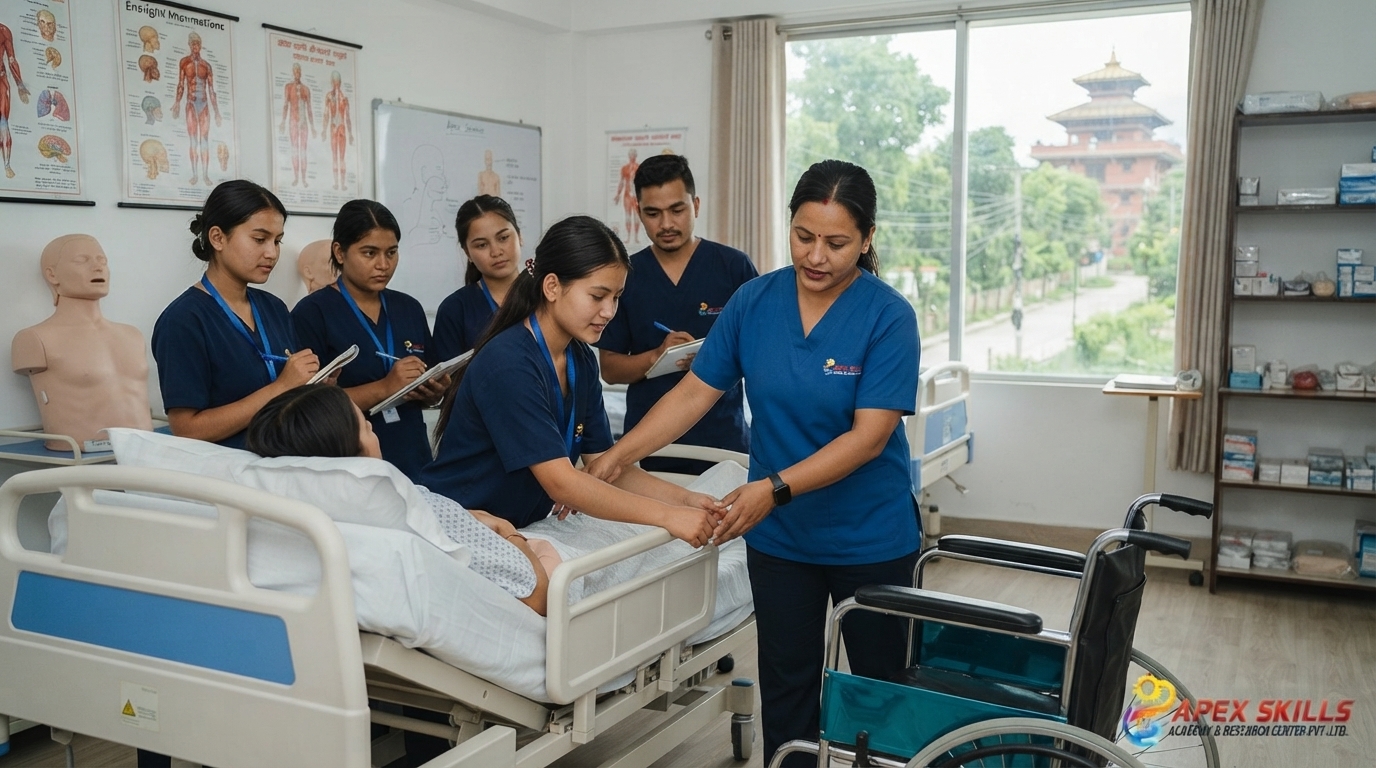
If you are interested in learning and want to take Elderly Caregiver Training, Apex Skills Academy offers Elderly Caregiver Training. Contact them and get enrolled now!
Frequently Asked Questions
What is the starting salary of a caregiver in Nepal?
The salary of entry-level caregivers begins at about NPR 20,000–25,000 per month, but the specific salary will vary based on employer, location, responsibilities, and qualifications.
How much can an experienced caregiver earn in Nepal?
In some roles, experienced caregivers can make NPR 40,000–60,000+ per month. Depending on responsibilities and working conditions, specialized and living in positions may be able to command better pay.
Does CTEVT caregiver training ensure that one gets better pay?
No, there is no guarantee of a specific salary through certification or training, but recognized training can enhance employability.
How much time will be taken for CTEVT caregiver training?
This is the current list of the CTEVT caregiver curriculum, which includes 390 hours of theoretical and practical/project work.
Is there any option of working abroad after caregiver training in Nepal?
Caregiver training may apply to overseas employment routes, but education/literacy, visa, experience and recruitment requirements vary from country to country.
Which country pays caregivers the most?
It is impossible to give a single answer as salary, taxes, housing, living expenses and working conditions are different. More pay doesn't necessarily mean more savings.
What is the scope of study of caregivers in Nepal?
Job opportunities that are suitable for patients, children, elderly people, and people with disabilities are suitable for people who are patient, responsible, and interested in helping others.
Final Thoughts
Employer and duty requirements determine the caregiver salary in Nepal, ranging from the entry level of NPR 20,000 per month to NPR 40,000 to 60,000 or higher for experienced or specialized caregivers.
Over time, you may have increased career opportunities through experience and specialization, and professional training can assist in gaining hands-on skills needed to enter the profession. In addition to the advertised salary, consider the total employment package (such as deductions, accommodation, hours worked, visa requirements, and contract conditions) when you are considering working overseas.